
In cabinet manufacturing, especially for kitchens, bathrooms, and coastal environments, moisture resistance is one of the most important properties of a panel.
However, in today’s market, many boards are labeled as “moisture-resistant MDF”, while in reality they perform no better than ordinary MDF.
For cabinet manufacturers and distributors, choosing the wrong material can lead to serious issues such as panel swelling, edge cracking, or paint failure.
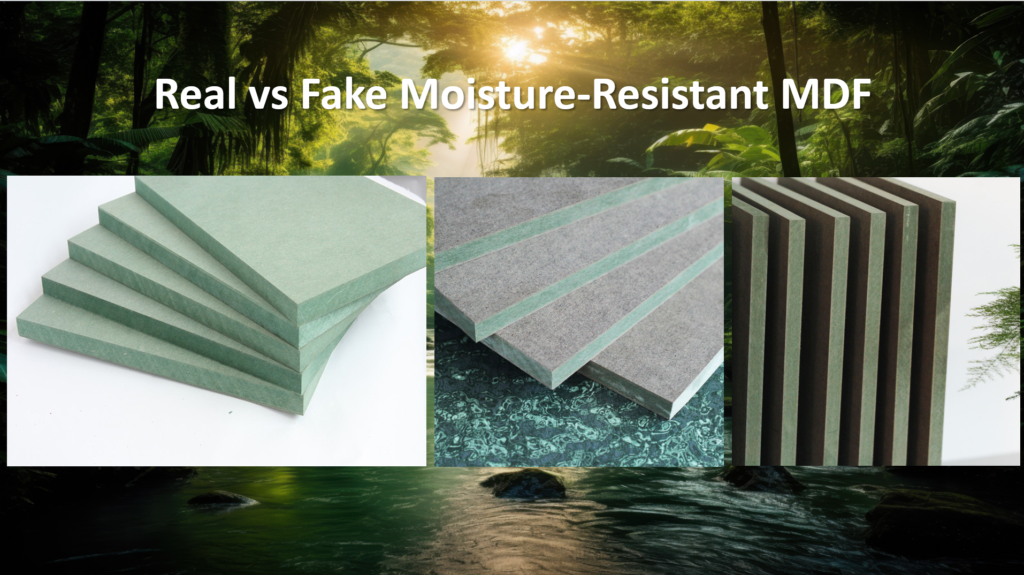
So how can you tell the difference between real moisture-resistant MDF and fake moisture-resistant boards?
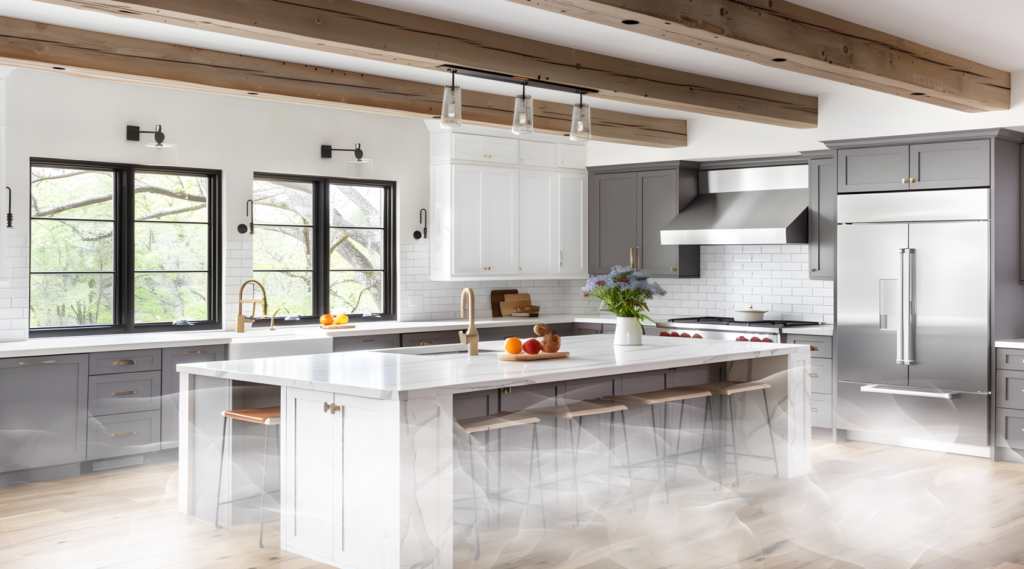
Why Moisture Resistance Matters in Cabinet Manufacturing
Moisture is one of the biggest enemies of engineered wood panels.
In environments like:
- kitchens
- bathrooms
- laundry rooms
- coastal regions with high humidity
ordinary MDF can absorb water through edges and surfaces, leading to:
• panel swelling
• deformation
• edge damage
• coating failure
This is why professional cabinet manufacturers prefer moisture-resistant MDF (MR MDF) for critical applications.
The Problem: Fake Moisture-Resistant Boards in the Market
Some suppliers label their boards as MR MDF simply because they add a small amount of moisture-resistant additive or dye the board green.
However, color alone does not guarantee moisture resistance.
In reality, many so-called MR boards fail basic technical requirements such as:
- swelling resistance
- internal bonding strength
- structural density
This is why understanding the technical indicators is essential.
4 Key Indicators of Real Moisture-Resistant MDF
1. Board Density
Density plays a crucial role in moisture resistance.
Higher density boards have a tighter internal structure, which slows water penetration.
Typical density range for high-quality moisture-resistant MDF:
800–850 kg/m³
Higher density improves:
- structural stability
- machining quality
- resistance to edge swelling
2. Thickness Swelling Rate
This is one of the most critical indicators.
It measures how much the board expands after being exposed to water.
A high-quality moisture-resistant board should have a low thickness swelling rate, typically:
≤ 8%
Lower swelling means the board maintains dimensional stability even in humid environments.
3. Internal Bond Strength
Internal bonding strength reflects how strongly the fibers are bonded together.
Poor bonding leads to fiber separation after moisture exposure.
High-performance MDF should achieve:
≥ 1.2 MPa internal bonding strength
This ensures structural stability during machining and long-term use.
4. Surface Bonding Strength
For painted cabinet doors or laminated surfaces, strong surface bonding is essential.
Weak boards can cause:
- paint cracking
- veneer peeling
- coating delamination
High surface bonding strength ensures durable finishing results.
Common Misconceptions About Moisture-Resistant MDF
Green Color Means Moisture Resistant
This is a common misconception.
Green color is often just a dye added during production.
It does not guarantee moisture resistance.
Always rely on technical data and test reports, not color.
All MDF Can Be Used in Kitchens
Standard MDF may perform well in dry environments but is not designed for high humidity.
Using ordinary MDF in kitchen cabinets can significantly reduce product lifespan.
Applications for Moisture-Resistant MDF
Real moisture-resistant MDF is widely used in:
- kitchen cabinet doors
- bathroom furniture
- coastal residential projects
- painted cabinet panels
- CNC routed cabinet doors
For cabinet manufacturers, using the right panel improves product reliability and brand reputation.
Choosing a Reliable MDF Supplier
When sourcing moisture-resistant MDF, it is important to verify:
• technical test reports
• stable density control
• consistent production quality
• compliance with formaldehyde emission standards
Reliable panel performance starts with reliable raw materials.
Final Thoughts
Not all moisture-resistant MDF boards are created equal.
Understanding key indicators such as density, swelling rate, and bonding strength can help cabinet manufacturers avoid material failures and ensure long-lasting products.
For applications exposed to humidity, choosing genuine moisture-resistant MDF is not just a material choice—it is a quality commitment.